By Gregory Caronis, MD – Orthopedic Foot & Ankle Surgeon, Fellowship-Trained
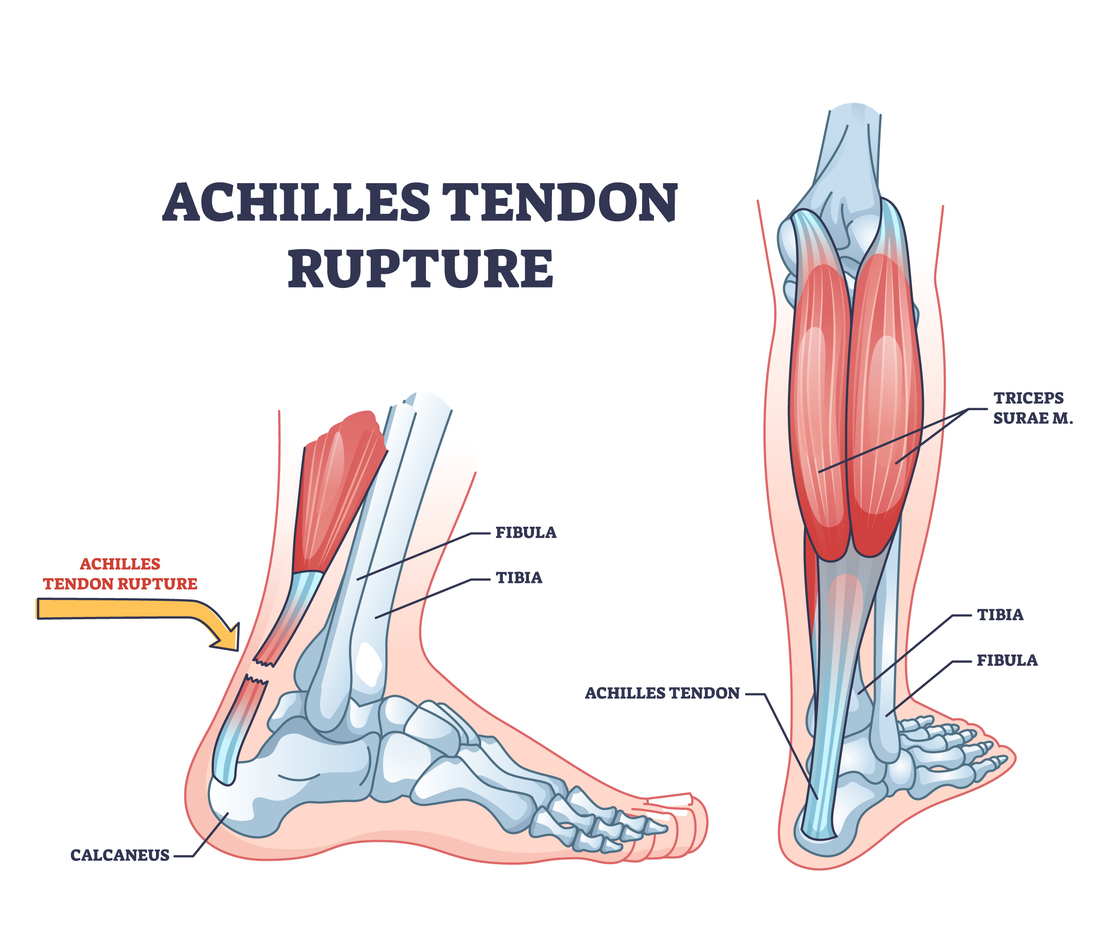
It’s a classic scenario in sports medicine: a weekend athlete head outs for a friendly basketball game or a quick jog and suddenly feels a sharp, violent “pop” in the back of the ankle. Many patients describe it as feeling like they were kicked or struck from behind, only to turn around and find no one there.That sensation is the hallmark of an Achilles tendon rupture. This injury causes immediate pain, swelling, and a distinct inability to “push off” the foot while walking.
Why the “Weekend Warrior”?
These injuries are most frequent in adults who are active but don’t train consistently—the “weekend warriors.” As we age, the Achilles tendon naturally loses some of its elasticity and blood supply, making it more vulnerable to sudden, explosive movements.
Diagnosis and Recovery
Prompt evaluation by an orthopedic specialist is critical. A physical exam, often including the Thompson Test (squeezing the calf to check for foot movement), can quickly confirm the diagnosis.
Recovery paths generally fall into two categories:
-
Non-Surgical Management: For patients with lower activity demands, treatment may involve a series of casts or specialized boots to allow the tendon to heal naturally.
-
Surgical Repair: For active individuals, surgery is often the gold standard. Modern minimally invasive techniques use high-strength suture anchors to reattach the tendon, offering a more stable repair and a lower risk of re-rupture.
Whether you choose surgery or conservative management, the goal is the same: a structured rehabilitation program to get you back on the court, the field, or the trail with a stronger, more confident step.
Schedule a Consultation
If you’re experiencing heel or Achilles pain, don’t wait for it to worsen. Early diagnosis and treatment can make a significant difference in recovery.
Gregory Caronis, MD
Orthopedic Foot & Ankle Surgeon – Northern Illinois