By Gregory Caronis, MD – Orthopedic Foot & Ankle Surgeon, Fellowship-Trained
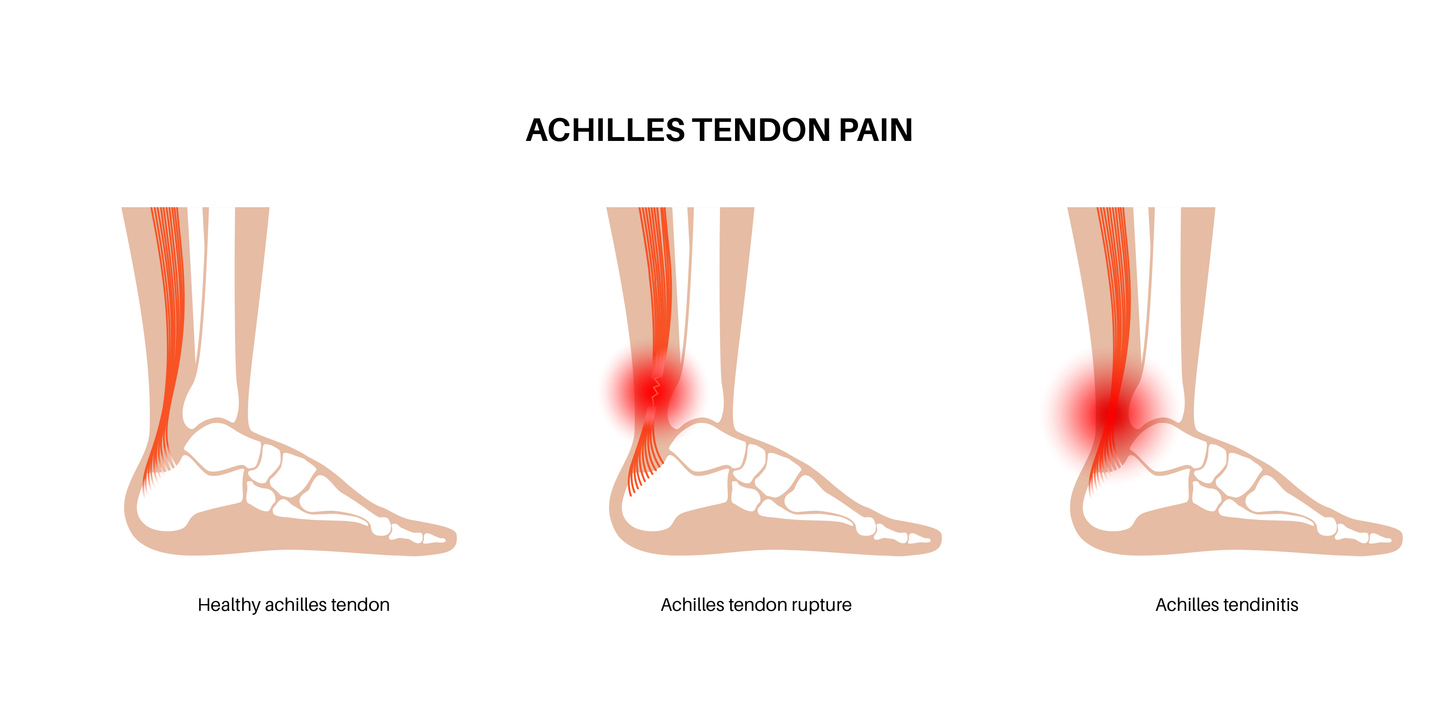
If you’ve ever felt a sharp, nagging pain at the back of your ankle after a morning run—or even just while stepping out of bed—you aren’t alone. While many fear the “pop” of a complete rupture, the reality is that most Achilles issues fall under the umbrella of Achilles Tendonitis.
This condition is an irritation or inflammation of the tendon that connects your calf muscles to your heel bone. It doesn’t usually happen in an instant; it’s more of a slow burn caused by overuse, tight muscles, or even those worn-out sneakers you’ve been meaning to replace.
The Two Faces of Achilles Pain
Not all tendonitis is created equal. Understanding where your pain is located can help determine the best course of action:
| Type | Location | Common Characteristics |
| Mid-substance | Above the heel bone | The tendon feels thickened, “ropey,” and tender to the touch. |
| Insertional | At the heel attachment | Often involves bone spurs or calcium buildup where the tendon meets the bone. |
Red Flags: How to Spot It
Achilles Tendonitis is a “talkative” injury. It usually gives you plenty of warning signs before it becomes a chronic problem:
-
Morning Stiffness: That first walk to the bathroom feels like you’re walking on wooden pegs.
-
The “Warm-Up” Effect: Pain that eases during light activity but returns with a vengeance afterward.
-
Localized Tenderness: A specific spot on the tendon that feels bruised when pressed.
The Road to Recovery: From Conservative to Advanced Care
The good news? Achilles Tendonitis is highly treatable. Most patients find relief through conservative methods without ever needing to see an operating room.
1. The First Line of Defense
For the first few weeks, the goal is to calm the irritation. This typically involves:
-
Active Rest: Swapping high-impact running for cycling or swimming.
-
Physical Therapy: Focusing on “eccentric” exercises (controlled lengthening of the tendon).
-
Support: Using heel lifts to take the tension off the tendon.
-
Reduction: Utilizing anti-inflammatory medications to manage the initial flare-up.
2. When to Look Deeper
If the pain persists despite your best efforts, it might be time for advanced imaging. An MRI can provide a detailed look at the internal structure of the tendon, checking for micro-tears or significant degeneration that isn’t visible on an X-ray.
3. Surgical Options
In chronic cases—especially with Insertional Tendonitis—surgery may be the most effective way to hit the “reset” button. This involves removing damaged tissue and any bone spurs that are rubbing against the tendon. The tendon is then securely reattached. While it sounds intense, it is a straightforward procedure with excellent long-term outcomes.
The Bottom Line: Don’t push through the pain. Achilles Tendonitis is your body’s way of asking for a change in routine. With timely care and a bit of patience, most people return to their favorite activities stronger than before.
Would you like me to draft a specific Physical Therapy exercise guide focused on the “eccentric loading” mentioned above?
Schedule a Consultation
If you’re experiencing heel or Achilles pain, don’t wait for it to worsen. Early diagnosis and treatment can make a significant difference in recovery.
Gregory Caronis, MD
Orthopedic Foot & Ankle Surgeon – Northern Illinois